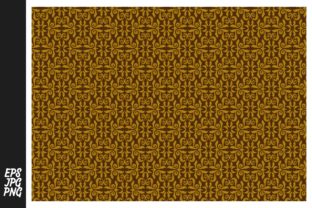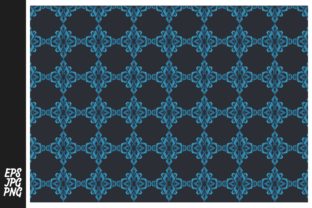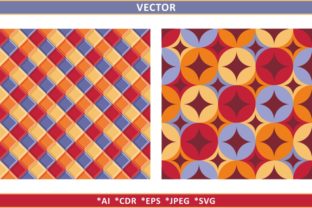
Abstract Seamless Geometric Pattern: A Practical Design Asset for Real Projects
An Abstract Seamless Geometric Pattern is more than a decorative background—it’s a functional, production-ready design element engineered for versatility across digital and print workflows. Unlike static images or low-resolution textures, this type of pattern repeats flawlessly at any scale without visible seams, making it ideal for applications where continuity matters: from full-bleed wall art to repeating fabric prints or responsive web backgrounds. Its abstraction—achieved through deliberate simplification of form, intentional negative space, and balanced rhythm—ensures visual interest without visual noise.
What Sets This Pattern Apart in Practice
This particular Abstract Seamless Geometric Pattern delivers consistency and adaptability through format diversity and structural integrity. The included .EPS10 and .AI files support deep editing in Adobe Illustrator (v10+), allowing users to adjust individual shapes, recolor entire sections, or scale elements proportionally without distortion. The .SVG version—though not separated into layered components—retains vector fidelity for web use, while the high-resolution .JPG provides immediate usability for mockups, social media banners, or printed proofs. Even .CDR (CorelDRAW X6+) compatibility extends its reach to designers using alternative vector platforms.
The pattern itself avoids overcomplication: clean lines, intentional repetition of polygons (including hexagons, triangles, and irregular tessellations), and restrained contrast keep it legible at small sizes and impactful at large scales. It leans into monochrome and minimal geometry—not as a stylistic limitation, but as a functional choice that supports typography overlays, branding integration, and accessibility compliance. Its abstraction also means it sidesteps cultural or temporal associations that might date quickly—unlike overtly retro or trend-driven motifs, this pattern maintains relevance across seasons and audiences.
Real-World Performance Across Use Cases
In practice, the reliability of a seamless geometric pattern hinges on two things: technical execution and contextual fit. This Abstract Seamless Geometric Pattern performs well in both areas. For example, when applied to baby shower invitations, its clean structure provides subtle sophistication without competing with delicate script fonts or pastel palettes. As a t-shirt print, the vector formats allow precise resizing for chest logos or all-over prints—no pixelation, no alignment issues. In web design, the SVG and optimized JPG versions load efficiently and scale responsively across devices.
Scrapbooking and custom greeting cards benefit from the pattern’s ability to serve as a textured backdrop behind photos or handwritten notes—its geometric rhythm adds depth without overwhelming content. As wall art or room decor, it holds up under large-format printing (e.g., 24" × 36" posters or wallpaper panels) because the repeat tile is mathematically aligned and tested for edge continuity. Users report consistent results whether exporting for CMYK print runs or RGB digital displays—no unexpected color shifts or clipping artifacts.
Who Benefits Most—and Why
Freelance graphic designers find this Abstract Seamless Geometric Pattern especially valuable during client onboarding. When developing brand guidelines or presentation decks, having a polished, editable background saves hours of manual tiling or plugin-dependent workarounds. Small business owners launching product lines—especially in home goods, apparel, or stationery—use it to prototype packaging wraps, label backdrops, or Shopify store banners without commissioning custom illustrations.
Educators and workshop facilitators integrate it into printable worksheets or slide templates where visual cohesion supports learning without distraction. Bloggers and content creators repurpose it across Pinterest pins, email headers, and ebook covers—maintaining a unified aesthetic across touchpoints. Even marketers running A/B tests on landing pages appreciate having a neutral yet distinctive background option that doesn’t require licensing clearance or attribution.
That said, it’s not universally optimal. Users needing highly detailed, organic, or illustrative patterns (e.g., botanical watercolor repeats or hand-drawn doodle borders) will find its geometry too structured. Similarly, those requiring multi-layered, animated, or interactive SVGs won’t get those features here—the SVG is flat and static. And while the monochrome base works broadly, designers needing built-in color variants must manually generate them using the editable vector files.
Workflow Integration and Long-Term Utility
The inclusion of multiple industry-standard formats reduces friction in existing pipelines. Designers using Figma or Sketch can place the SVG directly; those in Affinity Designer or InDesign can embed the EPS or AI file with full editability. Print service providers accept the high-res JPG for quick proofs and the vector files for final output—eliminating guesswork about resolution thresholds.
Because the pattern is abstract and geometric—not tied to a specific trend or season—it resists obsolescence. A 2022 wedding invitation using this pattern still feels current in 2024, unlike designs anchored to fleeting aesthetics like “cottagecore” or “Y2K revival.” Its strength lies in quiet utility: it supports rather than dominates, structures without constraining, and adapts without demanding rework.
Practical Recommendations for Best Results
- For print projects: Use the .EPS or .AI file whenever possible—especially for large-format output—to preserve sharp edges and enable spot-color separation if needed.
- For web use: Prefer the .SVG for hero sections or icons; use the high-res .JPG only where SVG isn’t supported or where subtle compression artifacts are acceptable (e.g., blog post headers).
- When customizing colors: Adjust fills—not strokes—in vector editors to maintain crispness. Avoid adding gradients or complex effects unless your output medium supports them reliably.
- For fabric or packaging: Confirm tile dimensions match your production requirements (e.g., 12" × 12" for textile printing); most users find the default repeat size flexible enough to scale without distortion.
Ultimately, an Abstract Seamless Geometric Pattern earns its place in a working designer’s toolkit not by being flashy, but by being dependable. It solves a narrow but frequent problem—how to fill space meaningfully—with technical precision and aesthetic restraint. Whether you’re iterating on a logo lockup, building a brand mood board, or prepping assets for a client pitch, its consistency, format flexibility, and clean abstraction make it a pragmatic first choice—not just another download.